The internet is full of promises. “Melt belly fat in 7 days.” “Lose stubborn belly fat without exercise.” “The secret to abdominal fat loss they don’t want you to know.”
If you’ve spent any time searching for actual solutions to reduce belly fat, you’ve probably seen all of these claims and maybe even believed some of them. But here’s what the science actually tells us: There’s no magic formula for belly fat reduction. There’s no single supplement or fad diet that targets central weight gain. What does work is understanding how your body works and building sustainable lifestyle changes that stick.
Why Belly Fat Is So Stubborn: Understanding Your Body’s Fat Storage

The Real Reasons Your Belly Fat Won’t Budge
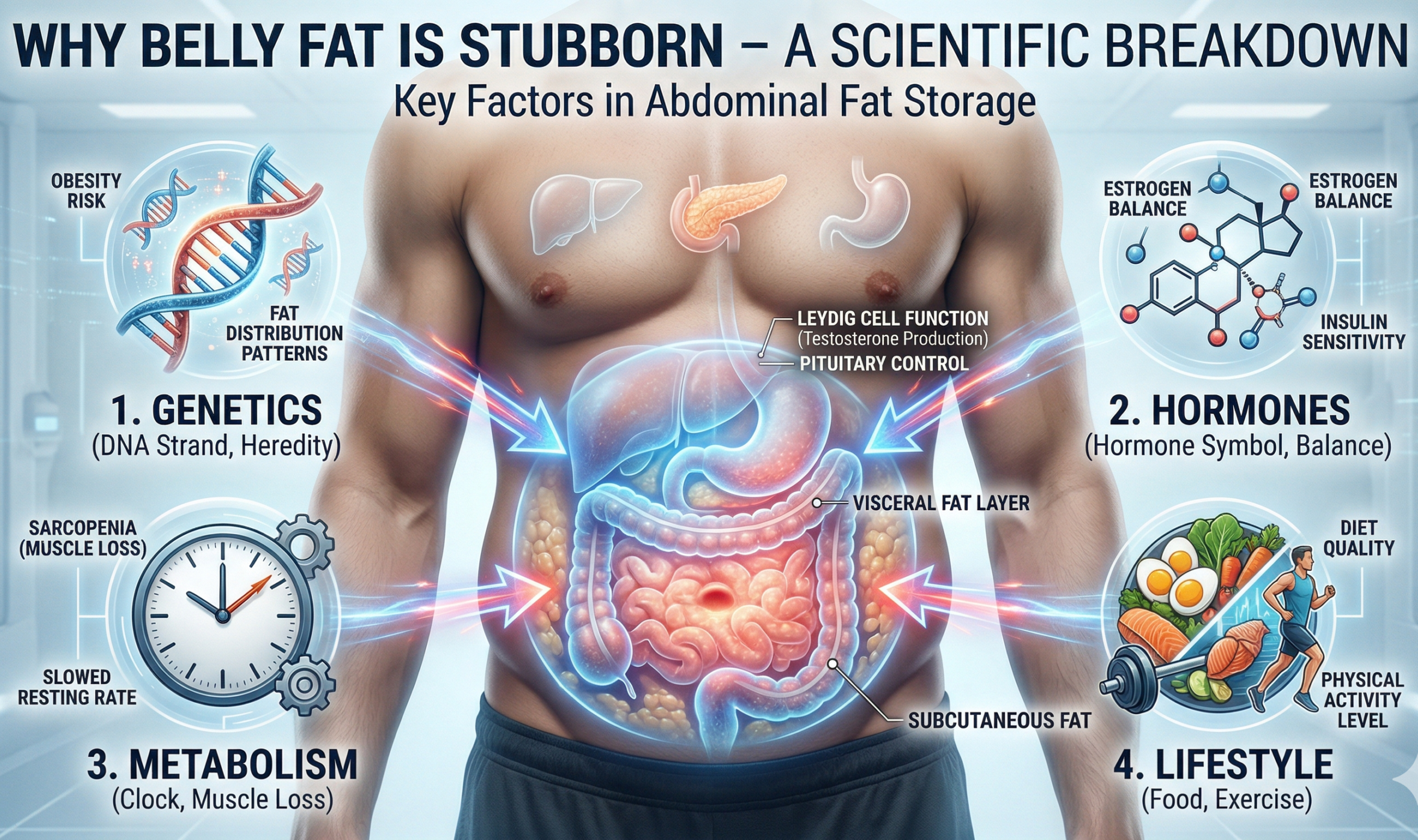
When you gain weight, your body doesn’t choose where to store it equally. Some people carry extra pounds in their hips and thighs. Others accumulate fat around the midsection. This pattern, called central weight gain, is more common than you might think and understanding why matters.
Belly fat is influenced by more than just calories in and calories out. Genetics play a significant role in where your body naturally stores fat. If your parents carried extra weight around their abdomen, there’s a higher likelihood you will too. But genetics isn’t destiny, it’s just one piece of the puzzle.
Hormones shape everything about fat storage and distribution. For people experiencing menopause, belly fat becomes a more pressing concern; this hormonal shift explains why fat suddenly accumulates around the midsection, even when diet and activity levels haven’t changed. The same applies to conditions like diabetes and blood sugar control issues. Insulin resistance creates an environment where your body preferentially stores fat in the abdominal area.
Your metabolism also plays a role. As we age, our metabolic rate naturally slows, making overall weight loss more difficult. Metabolic health and the efficiency with which your body burns calories become increasingly important during these life stages.
What Makes Belly Fat Different: Subcutaneous Fat vs. Visceral Fat
Not all belly fat is created equal. This is crucial to understand because it fundamentally changes your approach to fat loss strategies.
Subcutaneous fat is the soft, visible fat you can pinch under the skin. It sits just beneath the surface and is mostly a cosmetic concern; it affects how your clothes fit and how you feel about your appearance. This type of fat responds slowly to change. You can’t target it directly, but regular exercise and long-term lifestyle changes gradually reduce it.
Visceral fat, by contrast, is stored deep inside your abdomen, surrounding vital organs like your liver and pancreas. This is where the real health risks emerge. Visceral fat is metabolically active; it produces hormones and inflammatory substances that increase your risk of type 2 diabetes, heart disease, and other chronic conditions. The good news? Visceral fat responds more quickly to dietary changes and improved metabolic health than subcutaneous fat does.
Understanding the difference between visceral and subcutaneous fat explains why your abdominal obesity might be a health issue even if you don’t look overweight overall and why addressing it through sustainable approaches matters beyond just appearance.
The Six Evidence-Based Strategies That Actually Work
1. Build a Balanced Diet for Weight Loss, Not a “Belly Fat Diet.”
The internet loves to sell you restrictive approaches: eliminate all carbs, go keto, cut out all fat. None of these are sustainable, and none target belly fat specifically.
Here’s what actually works: A healthy eating habits approach focused on whole foods.
Start by reducing your fat and sugar intake, not eliminating them, but being intentional. The combination of both refined carbohydrates and added sugars is particularly problematic because it spikes blood sugar, encourages fat storage, and perpetuates hunger cycles. When you reduce added sugar and switch to unprocessed foods, your appetite naturally regulates.
Embrace healthy carbohydrates. Whole-grain diet approaches, beans, and fiber foods are your friends. A portion control diet isn’t about starving yourself; it’s about eating satisfying amounts of nutrient-dense foods. Beans and legumes, for instance, keep you full longer while supporting stable blood sugar and overall health.
Whole foods diet principles:
- Emphasize produce, whole grains, legumes, and lean proteins
- Cut back on packaged, processed foods
- Limit added sugars and refined carbohydrates
- Practice portion control, but with foods that naturally support satiety
- Stay consistent rather than perfect
2. Create a Calorie Deficit Through Smart Nutrition and Activity Balance
Weight loss ultimately comes down to energy balance. You need to consume fewer calories than you burn—but this doesn’t mean obsessive tracking or extreme restriction.
Calorie balance is best achieved through a combination approach:
- Moderately reducing caloric intake (not drastically, 30-50% reduction, not 70%)
- Increasing daily movement and structured exercise
- Building lean muscle mass, which increases your resting metabolic rate
A sustainable approach might mean eating 300-500 calories less than you burn daily, combined with increased physical activity. This creates steady, meaningful weight loss without metabolic slowdown or the muscle loss that comes with extreme dieting.
Think of nutrition for fat loss as long-term math rather than short-term restriction.
3. Exercise: The Non-Negotiable Component of Sustainable Weight Loss
Physical activity for weight loss isn’t optional. It’s foundational.
Follow established health guidelines: At a minimum, aim for 150 minutes of moderate aerobic exercise per week. This might look like 30 minutes of brisk walking five days a week, or any combination that totals two and a half hours of sustained activity.
But aerobic exercise is only half the story.
The Critical Role of Strength Training
Strength training benefits go far beyond aesthetics. Building muscle through resistance work offers these advantages:
- Muscle building for fat loss: Muscle is metabolically expensive; your body burns calories just to maintain it
- Maintain muscle mass: As you lose weight, strength training prevents the muscle loss that naturally occurs during calorie deficits
- Metabolism boost: More muscle means a higher resting metabolic rate
- Long-term fat loss: People who maintain muscle are far more successful at keeping weight off
Aim for strength training benefits by working with weights at least two days per week. This doesn’t require a gym—bodyweight exercises, resistance bands, or dumbbells all work.
High-Intensity Interval Training for Accelerated Results
High-intensity interval training (HIIT fat loss) offers unique advantages. HIIT workouts alternate between intense bursts of effort and recovery periods. They:
- Elevate your metabolic rate for hours after exercise
- Reduce visceral fat more effectively than steady-state cardio alone
- Can be completed in less time (20-30 minutes) and delivers significant benefits)
- Improve insulin sensitivity and blood sugar control
A fat-burning exercise routine might include circuits of sprints, burpees, jumping jacks, and strength moves. The key is pushing hard during intense intervals, then recovering.
However, HIIT should be safe and appropriate for your fitness level and any existing health conditions. If you have joint issues or cardiovascular concerns, talk with your doctor before starting.
The overall message: An exercise routine for fat loss combines cardiovascular activity with strength training and, ideally, some higher-intensity work. You can’t out-exercise a poor diet, but exercise is non-negotiable for lasting success.
4. Understand the Difference: Medications and Surgical Options
For some people, lifestyle changes alone are sufficient. For others, medical interventions become part of the equation.
Weight-Loss Medications: GLP-1s and Beyond
GLP-1 receptor agonists (medications like semaglutide and tirzepatide) have transformed the conversation around weight loss medications. These prescription drugs work by:
- Reducing appetite naturally
- Creating prolonged feelings of fullness
- Improving blood sugar control and insulin sensitivity
The research is clear: When prescribed and monitored by a physician, GLP-1 medications can lead to meaningful weight loss, including significant reductions in visceral fat. For people with obesity or type 2 diabetes, these medications can be genuinely transformative.
But they come with important caveats:
- They’re not right for everyone
- Side effects are common (nausea, GI issues) and require adjustment
- They work best as part of a larger, long-term weight management plan—not as a standalone solution
- Once you stop the medication, weight often returns if lifestyle hasn’t changed
Medical weight loss options exist, but they’re tools, not replacements for sustainable habits.
Surgical and Cosmetic Options
Cosmetic procedures like liposuction and tummy tucks can reduce visible belly fat, especially for people who are close to their goal weight but struggling with stubborn deposits. However, understand what they do and what they don’t:
- They reduce subcutaneous fat (the visible bulge)
- They don’t remove visceral fat or improve metabolic health
- They’re not weight loss tools—they’re cosmetic refinements
- They don’t address the underlying issues that caused fat accumulation
If your belly bulge is caused by diastasis recti (abdominal muscle separation after pregnancy) or an abdominal hernia, surgery can be both cosmetic and functional.
Belly fat supplements and fat burner supplements risks deserve mention here, too. Most over-the-counter “fat burners” are poorly regulated, may contain undisclosed substances, and lack solid evidence for long-term effectiveness. Many contain stimulants like caffeine or green tea extract that can cause unwanted side effects. The FDA regulation of supplements is far less stringent than for medications, making these products a risky gamble.
5. Address Underlying Metabolic Conditions
If you have metabolic health challenges, addressing them directly accelerates fat loss.
Blood Sugar Control and Insulin Resistance
Insulin resistance creates a metabolic environment where your body preferentially stores calories as fat, particularly in the abdominal area. It also drives hunger and cravings.
Address insulin resistance through:
- Reducing refined carbohydrates and added sugars
- Combining carbs with protein and healthy fats
- Regular physical activity (which improves insulin sensitivity immediately)
- Stress management and adequate sleep
- Medical intervention if needed (metformin, GLP-1s)
When you improve blood sugar control, weight loss becomes easier, and the health risks associated with visceral fat decrease.
Hormonal Considerations
If you’re experiencing menopause and belly fat accumulation, hormonal changes are the primary driver. While you can’t reverse menopause, optimizing the other factors—diet, exercise, sleep, stress—becomes even more important.
Some people find that addressing hormonal issues through hormone replacement therapy (under medical supervision) helps. Others focus on the controllable lifestyle factors. Either way, understanding that hormonal shifts are at play removes the guilt and self-blame.
Building Your Long-Term Weight Loss Plan
From Short-Term Fixes to Sustainable Fat Loss
This is where most people fail. They lose weight successfully through willpower and restriction, then regain it when they return to normal eating.
The reason? Because restriction isn’t sustainable.
Real, lasting weight loss comes from building a lifestyle you can actually maintain. This means:
- Sustainable weight loss isn’t about perfection; it’s about progress
- Consistency in weight loss matters more than intensity
- Slow weight loss benefits include metabolic preservation, muscle retention, and habit formation
- Long-term fat loss requires approaches you can stick with indefinitely
Creating Healthy Habits That Last
Your overall weight loss goal should be framed around behavioral change, not just the number on the scale.
Ask yourself:
- Can I eat this way for the next five years?
- Can I sustain this exercise routine long-term?
- Is this approach making my life better, not worse?
If the answer to any of these is “no,” adjust it now. Small changes that you maintain consistently beat dramatic changes you abandon in three months.
What Consistency Actually Looks Like
Long-term weight loss plan success looks like:
- Week 1-4: Building awareness, making small dietary swaps, establishing a basic exercise routine
- Month 2-3: Habits becoming more automatic, gradual progress on the scale, increased energy
- Month 4-6: Significant progress, newfound strength and fitness capacity, confidence building
- 6+ months: Habits embedded, weight loss continuing at 1-2 pounds per week, body composition improving
- Year 1+: Sustained weight loss, maintained muscle mass, improved health markers, lifestyle that feels normal
This timeline isn’t linear, and everyone’s journey is different. But it illustrates the reality: lasting change takes time, but it works.
The Health Wins Beyond the Mirror
From Abdominal Obesity to Metabolic Health
Reducing belly fat isn’t just about appearance. It’s about preventing chronic disease.
Central weight gain and obesity management directly impact:
- Blood sugar levels (reducing diabetes risk)
- Blood pressure (reducing cardiovascular disease risk)
- Inflammatory markers (improving overall health)
- Liver health (fatty liver disease improvement)
- Sleep quality (reducing sleep apnea risk)
When you improve metabolic health through fat loss, you’re preventing serious conditions and improving quality of life right now—better energy, better mood, better sleep, improved mobility.
Body Composition Matters More Than Body Weight
Fat vs. muscle loss is a key distinction. Two people at the same weight look completely different depending on their muscle-to-fat ratio. As you lose weight:
- Prioritize muscle retention through strength training
- Expect body composition changes even if the scale doesn’t move (muscle is heavier than fat)
- Measure progress through how you feel, how your clothes fit, how strong you are—not just numbers
A healthcare provider can help track body composition through methods like DEXA scans or bioelectrical impedance if you want objective data.
Your Next Steps: Making It Happen
Start Simple
You don’t need to overhaul everything simultaneously. Pick one area:
- Nutrition: Swap one meal per day for a whole-foods, balanced version
- Exercise: Add 10 minutes of walking daily or one strength training session per week
- Consistency: Track one habit for the next 30 days
Get Support
This might be a healthcare provider, a registered dietitian, a trainer, or a friend. Having someone to check in with dramatically increases success rates.
Monitor, Adjust, Persist
After 4 weeks, assess what’s working and what isn’t. If an approach feels unsustainable, modify it. If progress is happening, add another layer.
The Bottom Line: Why Belly Fat is Challenging—and How to Actually Win
Belly fat is stubborn because it responds to multiple factors: genetics, hormones, metabolism, diet, activity level, sleep, stress, and age. There’s no single solution because the problem isn’t simple.
But this complexity is also hopeful: it means you have multiple levers to pull. You can’t target belly fat directly, but you can:
- Improve your overall body composition through calorie balance
- Preferentially reduce visceral fat through diet and exercise
- Accelerate progress with strength training
- Consider medical options when appropriate
- Build habits that make sense for your life
The research is consistent: A balanced diet, regular physical activity (150+ minutes weekly plus strength training), and sustainable lifestyle changes work. Not instantly. Not dramatically. But reliably.
The question isn’t whether these approaches work. It’s whether you’re ready to commit to them consistently. Because that’s where real, lasting belly fat reduction happens—not in a supplement or a fad diet, but in the small, repeated choices that compound into transformation.
Start today. Stay consistent. The body you’re working toward is waiting.
Frequently Asked Questions
Can I lose belly fat without losing weight everywhere else?
No, you can’t target fat loss. When you create a calorie deficit, your body draws energy from fat stores throughout your body. However, where you lose fat first and last is determined by genetics. Some people naturally lose belly fat first; others lose it last.
How long before I see changes in my belly fat?
Visceral fat responds more quickly (visible progress in 4-8 weeks with consistent effort). Subcutaneous fat takes longer—typically 8-12 weeks before noticeable changes. But internal health improvements happen much faster, often within 2-4 weeks.
Is it ever too late to lose belly fat?
Never. People lose weight and improve their metabolic health at any age. The approach may need adjustments (more emphasis on strength training as you age, recovery time between workouts), but the fundamental principle—calorie balance plus movement—works across the lifespan.
What’s the difference between losing belly fat and losing overall weight?
The process is the same (calorie deficit + exercise). The difference is that belly fat reduction may be the most visible benefit for you personally, even if you’re losing weight from other areas too. Trust the process over your impatience with one specific area.
This article is for informational purposes and should not replace professional medical advice. Consult with your healthcare provider before starting a new diet or exercise program, especially if you have existing health conditions.