Testosterone is a hormone your body depends on from the very first weeks of life all the way through old age. Most people associate it with men and muscle, but that’s only part of the picture. Testosterone plays essential roles in both males and females — and when levels drift too high or too low, the effects show up in ways that are hard to ignore.
What Is Testosterone?
Testosterone is a sex hormone produced mainly by the gonads — the testicles in males and the ovaries in females. Your adrenal glands also contribute by releasing a hormone called dehydroepiandrosterone (DHEA), which your body then converts into testosterone and estrogen.
It belongs to a class of hormones called androgens, which drive the development of male physical characteristics. That said, testosterone isn’t exclusive to males. Both sexes need it, just in very different amounts.
Is Testosterone a Steroid?
Yes — natural testosterone is an anabolic-androgenic steroid. “Anabolic” means it builds muscle tissue. “Androgenic” means it promotes male sex characteristics.
This often surprises people. When most of us hear “steroids,” we think of the synthetic versions that some athletes misuse to bulk up or boost performance. Those are lab-made variations of testosterone, and misusing them at very high doses carries serious risks: blood clots, stroke, and a potentially elevated risk of prostate cancer, among other problems.
Healthcare providers do use synthetic testosterone legitimately — most notably in masculinizing hormone therapy for transgender men and nonbinary people, as well as in treating certain medical conditions.
What Does Testosterone Do? Functions by Life Stage
Testosterone doesn’t have a single job — it has many, and those jobs change depending on where you are in life.
Testosterone in Fetal Development
Around week seven of pregnancy, the Y chromosome activates a gene that triggers the development of testicles in male fetuses. Those testicles then start producing testosterone, which drives the formation of the male internal and external reproductive organs. Without this process, male genitalia simply don’t develop as expected.
Testosterone and Puberty in Males
Testosterone is the engine behind most of the physical changes that happen during male puberty, including:
- Growth in height
- Development of body and pubic hair
- Enlargement of the penis, testes, and prostate gland
- A significant increase in sex drive (libido)
Testosterone in Adult Males
In adult men, testosterone keeps working behind the scenes. It’s essential for sperm production, and it also signals the body to produce new red blood cells, keeps bones dense and muscles strong, and supports overall mood and well-being.
Testosterone in Adult Females
Women need testosterone too, though at much lower levels. In adult females, it plays a meaningful role in sex drive. Most of the testosterone produced in the ovaries gets converted into estradiol, the primary female sex hormone — but the small amount that remains as testosterone still has real effects on energy and libido.
How Does the Body Regulate Testosterone Levels?
Your body runs a tight feedback loop to keep testosterone within a healthy range. Here’s how it works:
The hypothalamus (a region at the base of your brain) releases gonadotropin-releasing hormone (GnRH). That signals the pituitary gland to release luteinizing hormone (LH), which travels through the bloodstream to the gonads and triggers testosterone production.
As testosterone levels rise in the blood, they suppress GnRH production — essentially telling the system to ease off. This self-correcting loop is what keeps levels stable throughout the day.
One important quirk: testosterone levels naturally peak in the morning and fall throughout the day. This is why testosterone blood tests are typically done in the morning to capture the most accurate reading.
If any part of this chain — the hypothalamus, pituitary gland, or gonads — isn’t working properly, levels can tip too high or too low.
How Is Testosterone Tested?
If your doctor suspects your testosterone is out of range, they’ll likely order one or more of the following:
-
Total testosterone blood test— usually scheduled in the morning for accuracy
-
Luteinizing hormone (LH) blood test— to assess how the pituitary is signaling
-
Follicle-stimulating hormone (FSH) blood test— to check the broader hormonal picture
Results are measured in nanograms per deciliter (ng/dL). What counts as “normal” varies by lab and by the specific test used, so your doctor will always interpret your results against that lab’s own reference ranges.
Normal Testosterone Levels by Age and Sex
Normal Testosterone Levels in Males (ng/dL)
| Age | Normal Range |
| Under 1 year | Less than 12 |
| 1–5 years | Less than 12 |
| 6–10 years | Less than 25 |
| 11–15 years | Less than 830 |
| 16–17 years | 102–1,010 |
| 18–99 years | 193–824 |
Normal Testosterone Levels in Females (ng/dL)
| Age | Normal Range |
| Under 1 year | Less than 21 |
| 1–5 years | Less than 12 |
| 6–10 years | Less than 25 |
| 11–17 years | Less than 79 |
| 18–99 years | Less than 40 |
What Causes High Testosterone Levels?
Excess testosterone usually traces back to an underlying condition rather than lifestyle alone.
Polycystic Ovary Syndrome (PCOS)
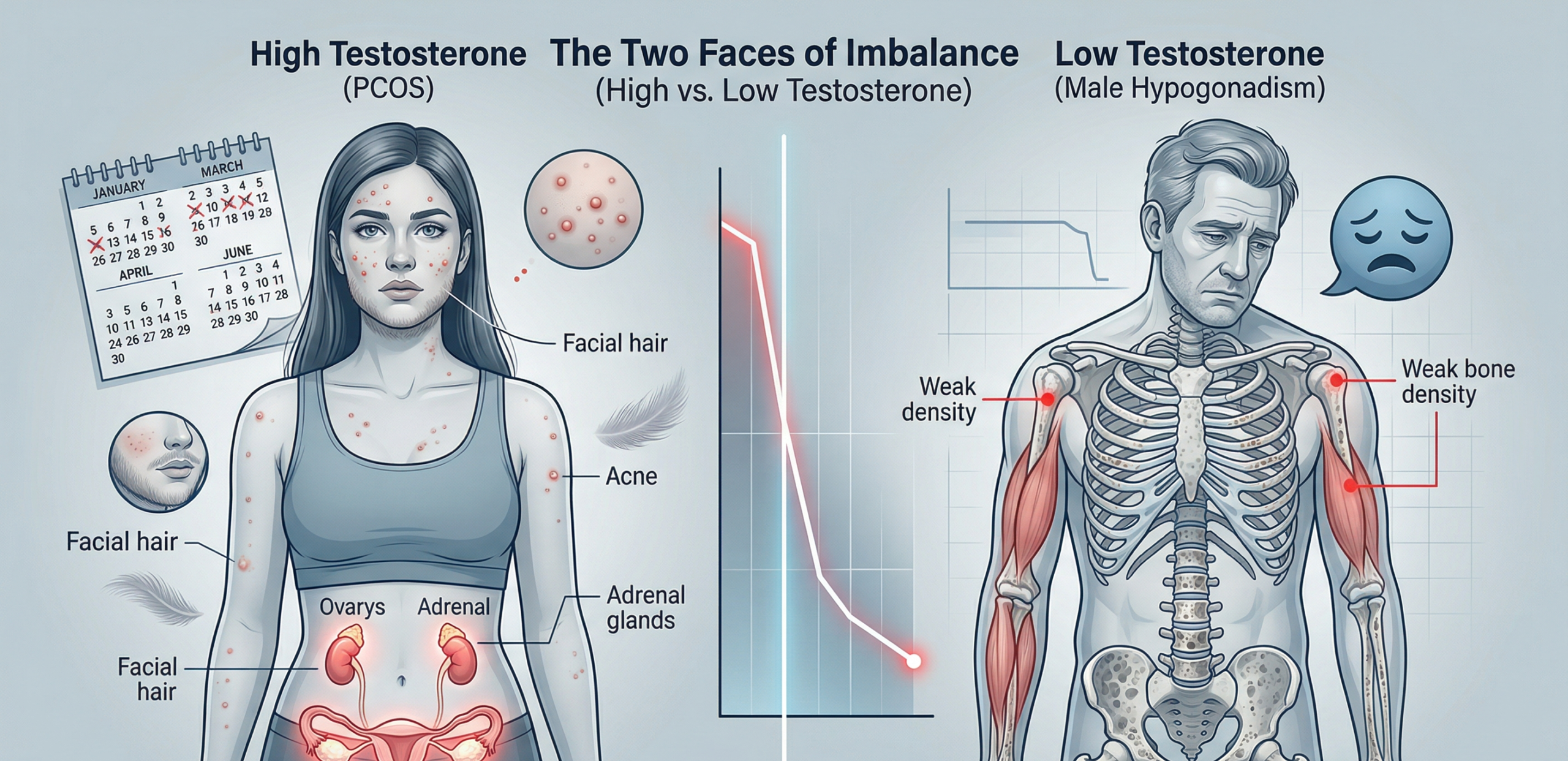
PCOS is the most common cause of high testosterone in females. It’s a hormonal imbalance where the ovaries produce excess androgens. Up to 15% of females of reproductive age have it, and many don’t know. Symptoms include acne, excess facial and body hair (hirsutism), irregular periods, hair thinning at the front of the scalp, and a deeper voice.
Congenital Adrenal Hyperplasia (CAH)
CAH is a genetic condition where enzyme deficiencies in the adrenal glands prevent normal cortisol production. In response, the adrenal glands overproduce testosterone and other hormones instead.
Androgen-Producing Tumors
Both ovarian and testicular tumors can secrete excess testosterone. Adrenal tumors — though rare — can also produce too much androgen, estrogen, or both.
Effects of High Testosterone by Age and Sex
In males, high testosterone is uncommon and hard to detect in adults. In male children, it can cause precocious puberty — puberty beginning before age nine.
In females, the effects depend on age. In infants, high testosterone may cause clitoral enlargement. In adult women, the most common presentation is PCOS, with the cluster of symptoms described above.
What Happens When Testosterone Levels Are Too Low?
Low testosterone (often called male hypogonadism) primarily affects males, though females can experience symptoms too.
Two Types of Male Hypogonadism
Classical hypogonadism stems from a medical condition or physical damage — either present at birth (like Klinefelter syndrome or Kallmann syndrome) or acquired later in life from something that disrupts how the testicles, pituitary, or hypothalamus function.
Late-onset hypogonadism is tied to aging and is especially common in men with obesity or type 2 diabetes. It affects roughly 2% of men over 40.
Low Testosterone During Fetal Development
If testosterone is deficient during fetal development, male characteristics don’t form normally. This is called androgen insensitivity syndrome (AIS) — a condition where a genetically male fetus cannot respond to androgens properly. AIS almost always results in infertility and affects both fetal development and sexual development during puberty.
Low Testosterone During Male Puberty
A testosterone deficiency in puberty can lead to:
- Slowed height growth (though arms and legs may keep growing disproportionately)
- Limited pubic hair development
- Smaller penis and testes
- Less voice deepening
- Lower strength and endurance than expected
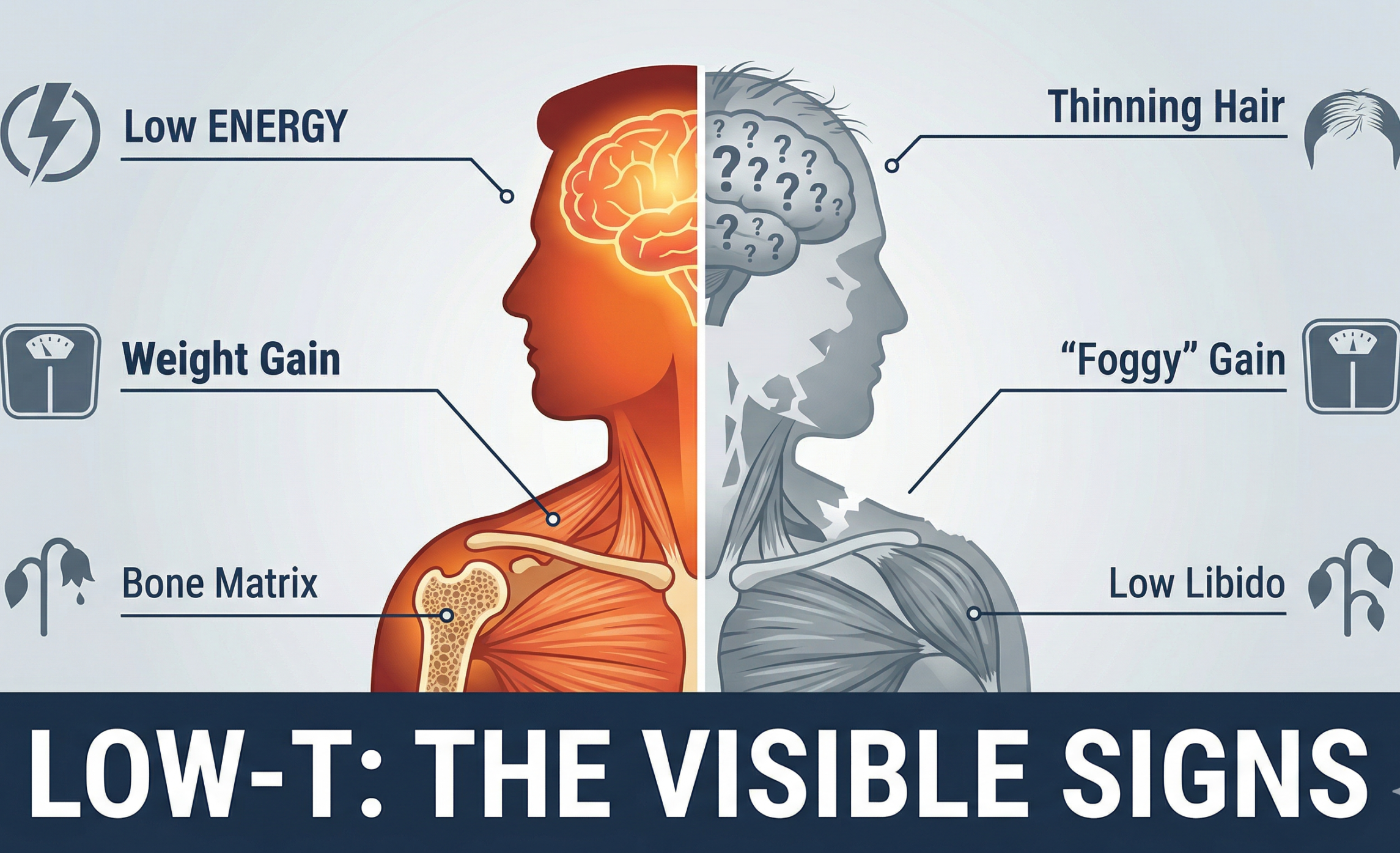
Low Testosterone Symptoms in Adult Males
Testosterone naturally declines with age in men, but it can drop to levels that cause noticeable problems, including:
- Unexplained muscle loss and fat gain
- Loss of body hair
- Depressed mood
- Erectile dysfunction
- Low sex drive
- Osteoporosis (bone thinning)
- Difficulty concentrating or remembering things
When Should You Talk to a Doctor About Testosterone?
If you’re noticing symptoms — whether it’s a sudden drop in libido, unexpected mood changes, difficulty building muscle, or signs that don’t fit your age and health — it’s worth bringing up with your doctor. The same goes for anyone experiencing early puberty in a child, irregular periods, or unexplained fertility issues.
A simple blood test, done at the right time of day, can tell a lot. And if something is off, treatment options do exist.
Key Takeaways
Testosterone is far more than a “male hormone.” It’s a foundational part of how the human body develops, matures, and stays healthy across an entire lifetime. Its effects touch reproduction, mood, bone density, muscle strength, and more — in both men and women.
Understanding where your levels stand and what symptoms to watch for is one of the more useful things you can know about your own health.
FAQ: Testosterone
1. Is testosterone only important for men?
No. While men produce much higher levels, testosterone plays essential roles in women as well. In adult females, it contributes to sex drive, energy levels, and is converted into estradiol (the primary female sex hormone).
2. Is natural testosterone the same as the “steroids” athletes use?
Natural testosterone is an anabolic-androgenic steroid, but it’s not the same as synthetic versions. Athletes often misuse lab-made variations at very high doses, which carries serious risks like blood clots and stroke. Doctors use synthetic testosterone legitimately for hormone therapy and certain medical conditions.
3. How does the body keep testosterone levels balanced?
Your body uses a feedback loop. The brain’s hypothalamus releases GnRH, which tells the pituitary to release LH. LH signals the gonads (testicles or ovaries) to produce testosterone. When testosterone levels rise, they suppress GnRH production, telling the system to slow down.
4. Why are testosterone blood tests done in the morning?
Testosterone levels naturally peak in the morning and decline throughout the day. Morning testing provides the most accurate and consistent reading.
5. What is considered a “normal” testosterone level for an adult?
-
Adult males (18–99 years): 193–824 ng/dL
-
Adult females (18–99 years): Less than 40 ng/dL
Note: Normal ranges vary slightly by laboratory.
6. What is the most common cause of high testosterone in women?
Polycystic Ovary Syndrome (PCOS). It affects up to 15% of females of reproductive age and causes symptoms like acne, excess facial and body hair, irregular periods, and scalp hair thinning.
7. What are the main symptoms of low testosterone in adult men?
Common symptoms include unexplained muscle loss, fat gain, loss of body hair, depressed mood, erectile dysfunction, low sex drive, osteoporosis (bone thinning), and difficulty concentrating.
8. Can females experience low testosterone symptoms?
Yes. While less studied, females can experience symptoms such as low libido, decreased energy, and mood changes when testosterone levels are too low.
9. At what age does low testosterone typically become a concern in men?
While testosterone naturally declines with age, late-onset hypogonadism becomes more common after age 40, especially in men with obesity or type 2 diabetes. It affects roughly 2% of men over 40.
10. When should I see a doctor about testosterone concerns?
You should talk to your doctor if you notice a sudden drop in libido, unexpected mood changes, difficulty building muscle, early or delayed puberty in a child, irregular periods, or unexplained fertility issues. A simple morning blood test can help determine if your levels are off.